


Build a Birdhouse


If you’re looking for a manageable weekend project, building a birdhouse is a great option. My son and I made a few for Mother’s Day gifts one year while he was in the Cub Scouts. Not only is this project great for kids (or grandkids), but a birdhouse is a great addition to your backyard for bird watching, helping to assist our ecosystem.
Why Have a Birdhouse?
Whether you’re interested in all kinds of birds or have a specific bird in mind, a birdhouse is great for both birds and humans alike. Birdhouses are safe nesting places away from the elements and predators. Many bird species eat insects and therefore help to control pest populations in your garden. Bird watching is also a great hobby for all ages. Depending on the type of birds you have, when to put out a birdhouse will depend on the nesting seasons. However, making sure a birdhouse is available in late winter or early spring is a good time for most birds to establish their nests.
Birdhouses should be placed in a safe area away from harsh elements and away from any predators like cats. And firmly mounted so as not to swing or sway.
Birdhouse Tips
Opening Sizes: It’s best to know the size of birds in your area. This will help to determine the best opening sizes to attract the right bird and not a predator. Your local or state Audubon society will have dimensions appropriate for the birds in your area.
Untreated Wood: Lumber used for the birdhouse should be untreated, as treated wood is harmful if ingested. They can be painted and or decorated once constructed, however!
Sloped Roof: No bird wants a soggy home and adding a sloped roof will encourage water runoff keeping nestlings and mama dry.
Drainage Holes: If you live in a damp climate, adding small drainage holes to the bottom of the birdhouse will help keep the wood dry and further prevent rot. You can also have a recessed bottom to keep it even drier and include a way to open the door for cleaning.
3/4" Thick walls: Thickness matters in a birdhouse like insulation matters in your own house. 3/4” walls help to provide insulation.
Don’t Add Perches: Perches are a great spot for predatory birds to sit and wait for nestlings. No perches keep the inhabitants safe.
While some bird species migrate south in the winter, there are many species that stay year-round in the Bay Area. As leaves and temperatures fall, it becomes more difficult for these birds to find food and shelter. Creating a bird-friendly garden not only helps our feathered friends, but can benefit your backyard micro-ecosystem. Birds eat insects such as aphids, mosquitoes and snails. They act as a natural pest control that can save your garden from harmful insecticides. Smaller birds, such as sparrows and finches, eat weed seeds, reducing the need to use chemicals in your garden and the pain of pulling weeds. Hummingbirds are great pollinators that can enhance the size and color of your blooms by spreading nectar from plant to plant. Creating a bird-friendly yard with native plants requires more time outdoors - and what is more relaxing than fresh air, fragrant flowers and the satisfaction of a well-kept garden?
Creating a Bird-Friendly Landscape
· Provide food, water and shelter. Place birdhouses at least 20 feet from feeders and baths. Keep them high enough to keep them safe from predators.
· If you make your roof removable, you can clean your birdhouse once a year by removing the old nest, scrubbing the interior with a stiff brush and a mild bleach solution.
· Landscape with native, environmentally conscious plants that require less water and are more disease resistant. Use diverse, layered vegetation (plants and trees that grow to different heights) to provide shelter for a variety of bird species.
· Birds love red berries and will choose those above others. Examples of native shrubs with red berries are Aronia, Barberry, Cotoneaster lacteuses and the hips of Nootka Rose. Other berry-producing shrubs include Symphoricarpos (Snowberry), Mahonia (Oregon Grape), Pyracanthus and Vaccinium.
Suggested Materials
1x6x8 pine board or a spare cedar picket
Miter saw
Drill with bits including a hole saw
Galvanized wood screws one to two inches
150-grit Sandpaper
Hinges
Clamps or painter's tape
Pencil
Birdhouse Steps
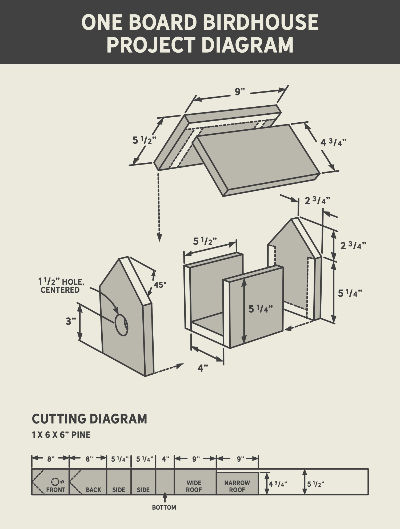
1. Cut your board using the cut sheet provided or design your own.
2. Drill the hole opening. We used a 1 1/2” hole saw.
3. Attach the sides and the back with screws. We used two per seam.
4. Position the bottom and recess it up into the birdhouse about 3/4”. Here is where you can drill small holes into the corners of the bottom board for drainage and airflow.
5. Attach the front using two screws per seam. Be sure to measure up 3/4” before screwing together the from and bottom.
6. Attach the roof panels. The smaller roof panel should be attached with screws. The larger roof panel should be attached to the top seam of the roof with two hinges. Use painter’s tape to hold in place.
7. Paint or decorate as desired.


Comments